Premenstrual syndrome. How to cope.
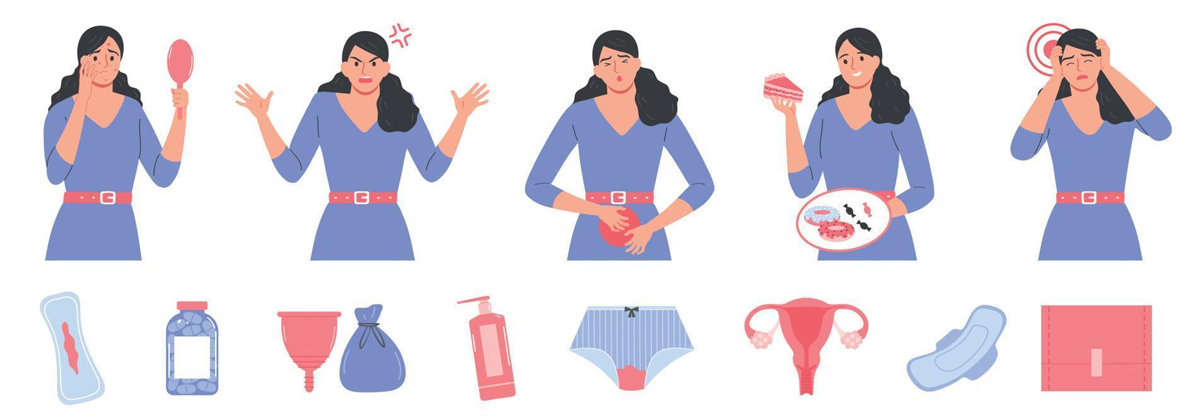
Premenstrual syndrome is a group
of varied symptoms which occur
around the time of your
menstruation.
These symptoms
include:
Mood swings, irritability, inability to
sleep and depression.
Headaches, bloating, breast
tenderness fatigue, muscle cramps.
Constipation ,diarrhoea ,nausea.
Although cramps, headache,
bloating, irritability are common
symptoms during a women's period
it is only considered to be a disorder
if it affects your ability to perform
normal day to day activities Also
the timing is important. These
symptoms if they are due to
premenstrual syndrome they will
typically appear 1 week before your
periods and disappear within 4 days
of start of periods.
Premenstrual syndrome is caused
by cyclical changes and fluctuation
in the hormone levels and chemical
changes in the brain. However there
are no abnormal levels of hormones
in your blood. A person suffering
from Premenstrual syndrome and
those who have normal symptoms
have similar levels of hormones
during the month. However the
response or sensitivity to these
hormones vary from person to
person.
Premenstrual syndrome cannot be
diagnosed by either blood tests for
hormones or by ultrasound
evaluation. It can only be diagnosed
by charting on the calender when
your symptoms appear and
disappear in relation to the
menstruation. This calender has to
be kept for 2 menstrual cycles.
There are no magic drugs to treat
this condition. The symptoms have
to be carefully assessed by your
gynaecologist. However the first line
treatment is making lifestyle
changes, changing your diet and
taking some supplements.
Lifestyle changes include, daily
yoga, pranayam ie breathing
exercises and general exercise for
30mins. Reduce stress , take plenty
of sleep and warm showers and
baths. Although you maybe
uncomfortable it is better to start
exercises and yoga. Initially you can
start with moderate levels and
gradually increase. This benefits
pain, general well being and
elevates mood.
Dietary change includes high fibre
diet, adequate calcium intake and
reduced salt. You must avoid coffee,
too much tea, alcohol and smoking.
Try herbal teas and plenty of fresh
fruits and vegetables.
Supplements and vitamins promote
good reproductive health. Vitamin
supplements such as calcium,
magnesium, vitamin D3, vitamin E,
vitamin B help. Also certain herbal
medicines help. However many of
these supplements have to be given
in proper dosage. So a proper
evaluation by your gynaecologist to
rule out other health conditions and
prescription of proper doses are
important.
If lifestyle changes and relaxation
methods do not work please visit
your doctor for further evaluation.